
Stop Spending the Test Budget on Surprises
Physical testing is one of the largest checks a program writes. A single cycle can run from $50,000 to $500,000, and most programs need more than one. The leadership question is simple: how much of that money is confirming a design you already trust — and how much is paying to discover problems that could have been found earlier, cheaper, and off the track or the bench?
The work you do before a test is booked is where that split is decided.
What You Are Actually Buying When You Book A Test
Every test answers a question. Walk in with several unproven options and the test becomes a sorting exercise. Some options fail. The team regroups. Another cycle goes on the calendar. Cost stacks. The schedule slips.
Walk in with a design that has already been pressure-tested on paper and in software, and the same test becomes confirmation. That is a different use of the same money.
Where Simulation Belongs in that Decision
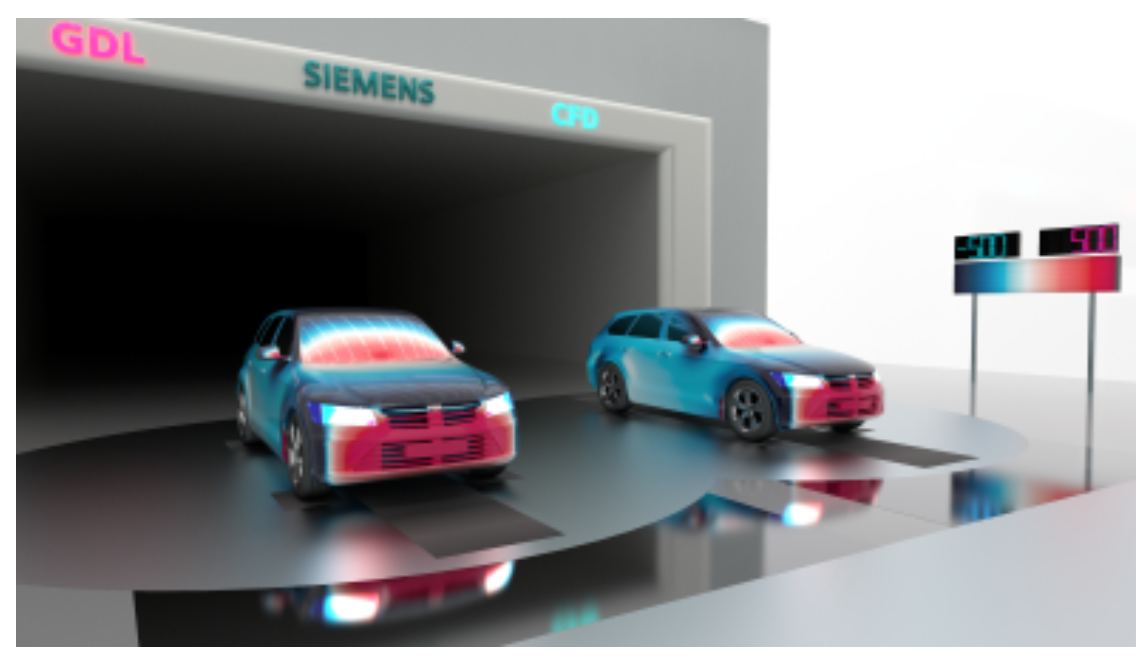
Simulation — using Siemens Simcenter STAR-CCM+ — lets a team evaluate options before hardware exists. For the people who approve the budget, that usually means four outcomes:
- Fewer paid test cycles to reach a design you will actually ship
- Problems found while a change still costs a model update, not a prototype
- More of the test budget spent on validation instead of discovery
- Cleaner design reviews and program gates, with fewer open questions
- How many design options are going into this test?
- Which of them have already been evaluated in simulation?
- What does a failed test — and another cycle — cost in time and money?
- Could simulation narrow this to one design before hardware is built?
Physical testing still has the last word. Simulation decides which designs deserve that last word.
What This Looked Like for NASCAR
When NASCAR moved to the NextGen car in 2022, a closed flat floor cut cooling air to the driver cabin. Incremental fixes helped, but cabin heat stayed a problem. In 2023 NASCAR had a promising idea — a shorter exhaust that exits earlier on the car — and wanted proof before committing it to the 2024 season.
TotalSim matched a baseline model to thermal data NASCAR had already collected on track, then evaluated the new concept. NASCAR built prototypes and ran them with multiple teams and drivers. The track results matched the model. The specification changed. The new exhaust now runs on all 40-plus cars in the series.
The work fit a compressed off-season and avoided a string of physical prototypes that would have burned time NASCAR did not have.
Questions worth asking before the next test is approved
- How many design options are going into this test?
Which of them have already been evaluated in simulation? - What does a failed test — and another cycle — cost in time and money?
- Could simulation narrow this to one design before hardware is built?
How TotalSim helps
TotalSim is a Siemens partner and Simcenter STAR-CCM+ specialist in Dublin, Ohio, with Siemens Expert Gold status for STAR-CCM+. We run simulations ahead of physical testing for engineering teams. We also provide the software, training, and support for teams that want that capability in-house.
A Practical Next Step
If the test line item keeps growing, or programs keep adding “one more cycle,” look at how you evaluate designs before booking a test. Simulation will not replace the track or the bench. It can stop you from paying those facilities to find problems you could have seen already.
Talk with our team about where simulation could trim your next test program.
Package Holiday: How CFD Is Helping NASCAR Improve Superspeedway Racing
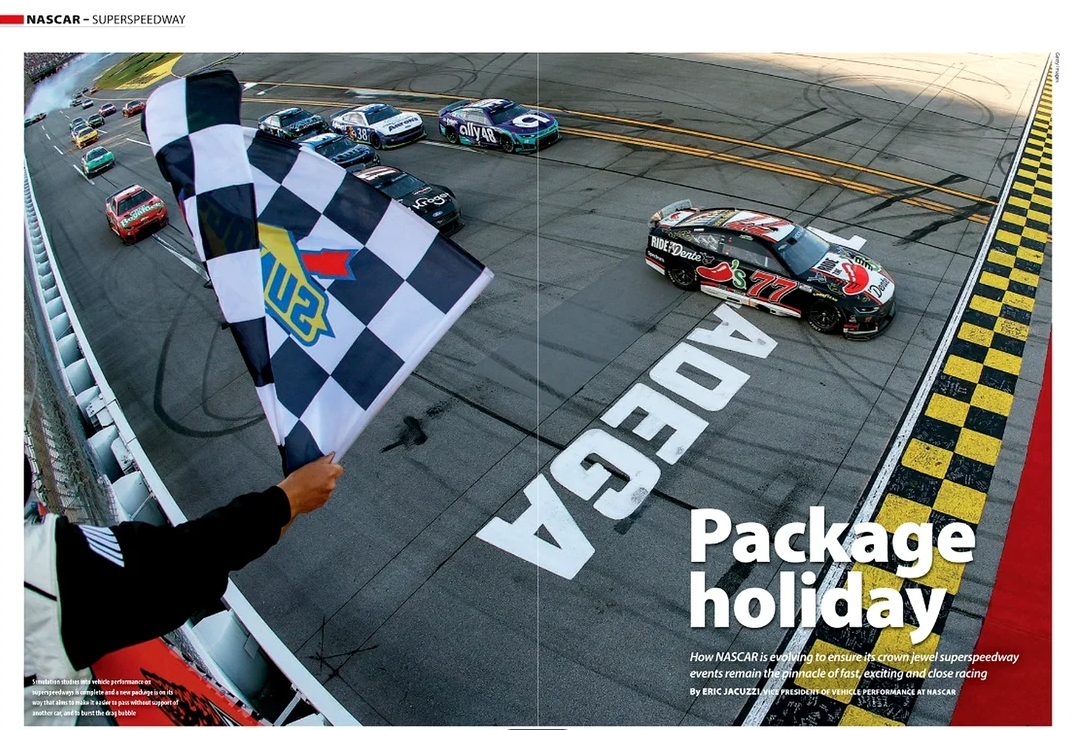
HSeptember 2026 Racecar Engineering article, “Package holiday,” examines NASCAR’s revised super speedway aerodynamic package and how TotalSim US's CFD work was used to evaluate whether the new package would improve overtaking and reduce the likelihood of processional racing.
NASCAR’s super speedways—most notably Daytona and Talladega—present a unique aerodynamic challenge. The cars run in tightly packed groups at very high speeds, where small changes in drag, downforce, and the interaction between leading and trailing vehicles can have a major effect on racing.
In the article, Eric Jacuzzi, Vice President of Vehicle Performance at NASCAR, describes the development of a revised super speedway package intended to preserve the close racing that defines these events while giving drivers more opportunities to pass.
TotalSim USA Helps NASCAR Simulate the Art of the Pass
NASCAR is continually refining its superspeedway aerodynamic packages to maintain the close, competitive racing that defines events at Daytona and Talladega. But determining whether a package will actually improve overtaking is far more complicated than comparing the drag or downforce of a single car.
Working with NASCAR as its CFD partner, TotalSim USA used Siemens STAR-CCM+ to simulate a dynamic two-car passing maneuver based on a real race event. Race footage was used to establish the speed difference and vehicle motion during an actual pass, which was then reproduced in the CFD environment.
The simulation presented a significant computational challenge, requiring moving meshes, a large computational domain and approximately 10 days of simulation time for each run. The resulting analysis compared the aerodynamic interaction of different spoiler configurations and examined the balance between aerodynamic drag and available engine power.
The results showed a significantly more favorable passing scenario with the revised package. The article reports that the likelihood of successfully completing the simulated pass was approximately three times greater with the proposed package.
For TotalSim, the project is a compelling example of how advanced CFD can move beyond conventional aerodynamic analysis to answer a much more important engineering question: how will a design actually perform in the real world?
By connecting race data, transient CFD and vehicle performance, TotalSim USA helped NASCAR evaluate a complex aerodynamic change before it reached the racetrack—demonstrating the power of simulation to accelerate engineering decisions and improve real-world performance.

Taking 3D Scanning on the Road
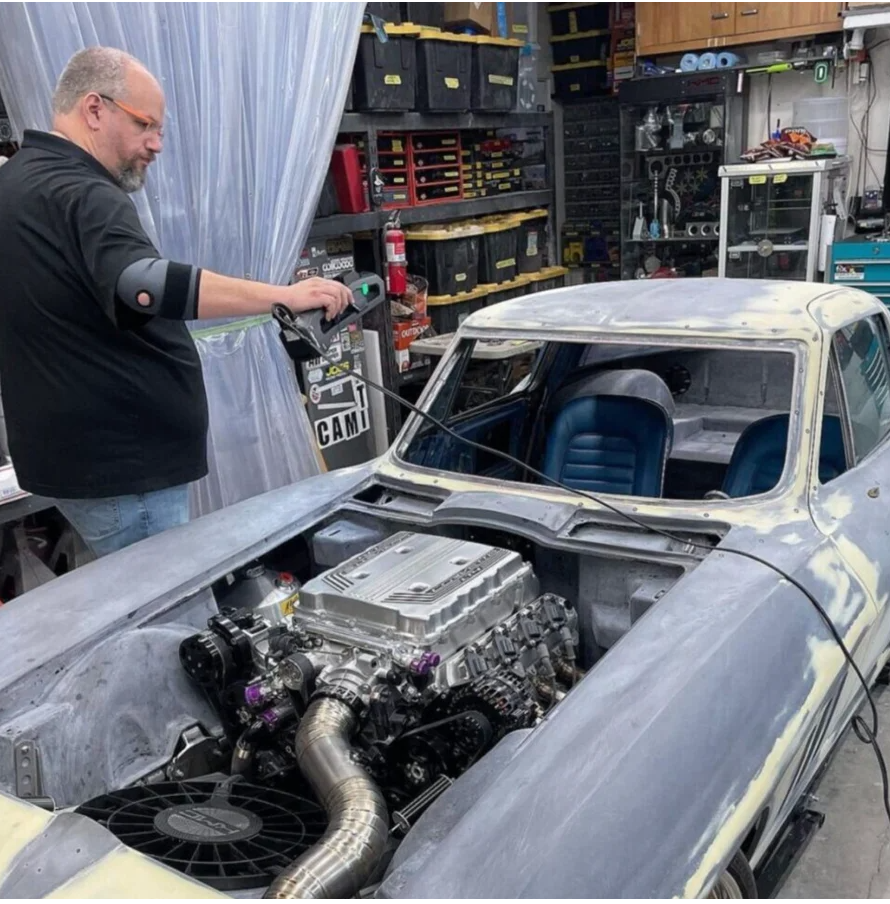
A few years ago, TotalSim’s Ben Cantrell headed to Oregon with a pretty cool assignment: help custom hot rod builder Kyle Kuhnhause bring a ’66 Corvette back to life. Using TotalSim’s 3D scanning technology, Ben captured detailed geometry from several parts and surfaces, creating accurate digital models that could be used to develop new and custom components.
That trip was a great example of how 3D scanning and reverse engineering can bridge the gap between the physical and digital worlds. Today, we continue to use the same approach to help turn real-world parts, vehicles, and prototypes into accurate digital models that can be designed, optimized, and even taken directly into CFD workflows.
From custom cars to performance optimization, sometimes the best place to start a simulation is with something that already exists.
NAAMIF | October 15–17 | Springfield, OH
We’ll be at the National Advanced Air Mobility Industry Forum, part of NAAMCE Aviation Weekend, connecting with leaders across advanced air mobility and exploring the technologies shaping the future of flight. The event brings together industry panels, workshops, exhibitors, networking, and even electric aircraft racing.
Zero Gravity Summit | October 28–29 | Salt Lake City, UT
Next up, we’re heading to the Zero Gravity Summit, where builders, operators, and leaders across aerospace, defense, and dual-use technology come together to discuss the future of national security technology. We’re looking forward to the conversations around hard tech, innovation, and the engineering challenges ahead.
PRI Show | December 10–12 | Indianapolis, IN
And, of course, we couldn’t wrap up the year without a trip to PRI. As the world’s largest racing trade show, PRI brings together the performance racing industry for three days of new technology, technical education, networking, and plenty of horsepower. We’re excited to reconnect with the racing community and talk all things simulation, aerodynamics, and performance.
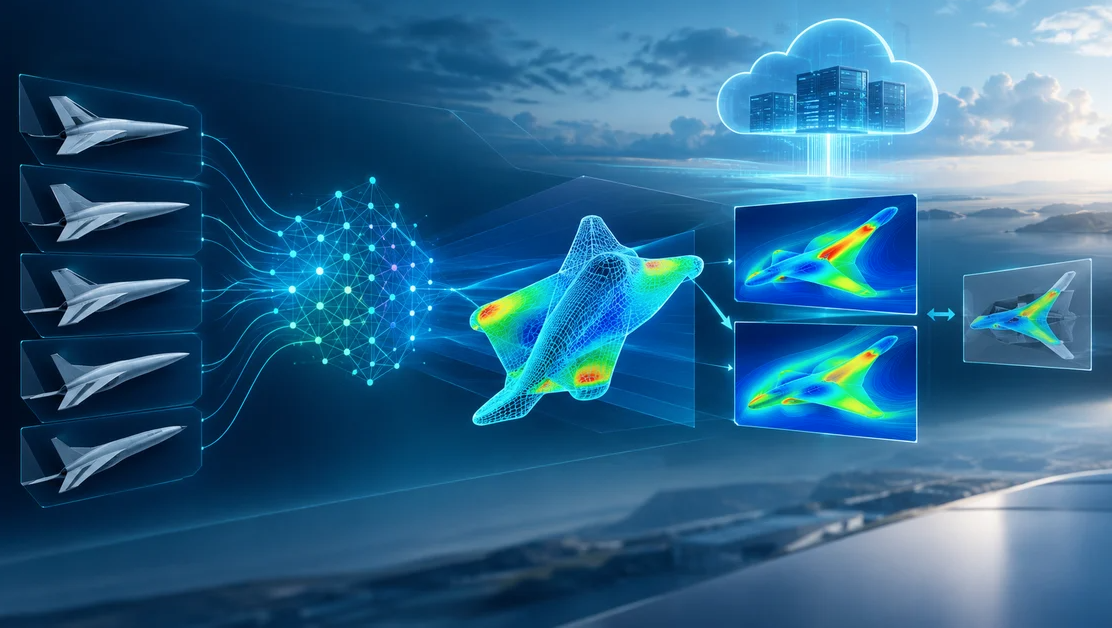
Artificial intelligence is rapidly changing the way engineers approach simulation. With Simcenter X, Siemens is bringing AI-powered capabilities directly into a cloud-based, multi-domain simulation environment—helping engineers spend less time navigating tools and searching for information, and more time exploring designs and making engineering decisions.
AI Assistance Where Engineers Need It
Simcenter X Advanced introduces an integrated AI chat experience designed to help engineers access Siemens’ simulation documentation and knowledge base using natural-language questions. Instead of searching through extensive documentation to find the right modeling approach or best practice, engineers can use AI assistance to quickly locate relevant information and guidance.
This can help streamline onboarding, accelerate troubleshooting, and support engineers as they explore simulation options across different domains.
Accelerating Design Exploration
One of the most significant opportunities for AI in simulation is reducing the number of expensive physics-based simulations required during optimization.
Through AI-augmented optimization, Simcenter X Advanced can work with Simcenter HEEDS to learn from previous simulation results and predict outcomes for new design points. The AI simulation predictor is designed to identify situations where an AI prediction can be used in place of another full physics-based simulation, while maintaining awareness of prediction accuracy.
The result is a more efficient approach to exploring large design spaces—allowing engineers to investigate more possibilities before committing computational resources to detailed simulations.
Cloud-Powered Simulation
AI is only part of the Simcenter X story. The platform also brings together CFD, mechanical, systems simulation, and multidisciplinary design optimization (MDAO) within a cloud-powered environment.
Simcenter X provides centralized cloud-managed licensing, scalable HPC capabilities, data management through Teamcenter X, and browser-based access for supported CFD workflows. This gives engineering teams greater flexibility to scale computational resources as project requirements change.
Why It Matters for CFD
For CFD teams, the combination of AI and scalable cloud computing creates an opportunity to rethink the traditional simulation workflow.
Rather than using AI simply as a replacement for CFD, the emerging approach is AI + physics:
Explore → Predict → Validate → Refine
AI can help engineers explore a broader design space and identify promising concepts, while high-fidelity CFD remains essential for validating critical designs and understanding the underlying physics.
This complementary approach can help teams reserve expensive computational resources for the simulations where they provide the greatest engineering value.
The Bigger Picture
Siemens continues to expand AI throughout the Simcenter portfolio. In its 2026 Simcenter release, Siemens highlighted Simcenter PhysicsAI, which uses geometric deep learning to create physics-aware predictive models from simulation data and can accelerate certain prediction workflows substantially. Siemens says these models can be leveraged by its Intelligence Center X AI orchestration environment.
For engineers, the direction is clear: AI is becoming another tool in the simulation toolbox—not replacing physics, but helping engineers use simulation data and computational resources more effectively.
Interested in exploring what AI-augmented simulation could mean for your workflow?
TotalSim can help you evaluate where AI, cloud computing, and advanced CFD can add value to your engineering process.

And One More Thing... CFD is Getting Faster

CFD is getting faster. GPU acceleration, AI-assisted workflows, and increasingly automated simulation processes are changing how engineers approach design exploration. What once meant waiting days for a handful of simulations can increasingly mean exploring hundreds of possibilities in the same timeframe. It’s another reminder that sometimes the biggest changes in engineering aren't the things we're designing—they're the tools we're using to design them.

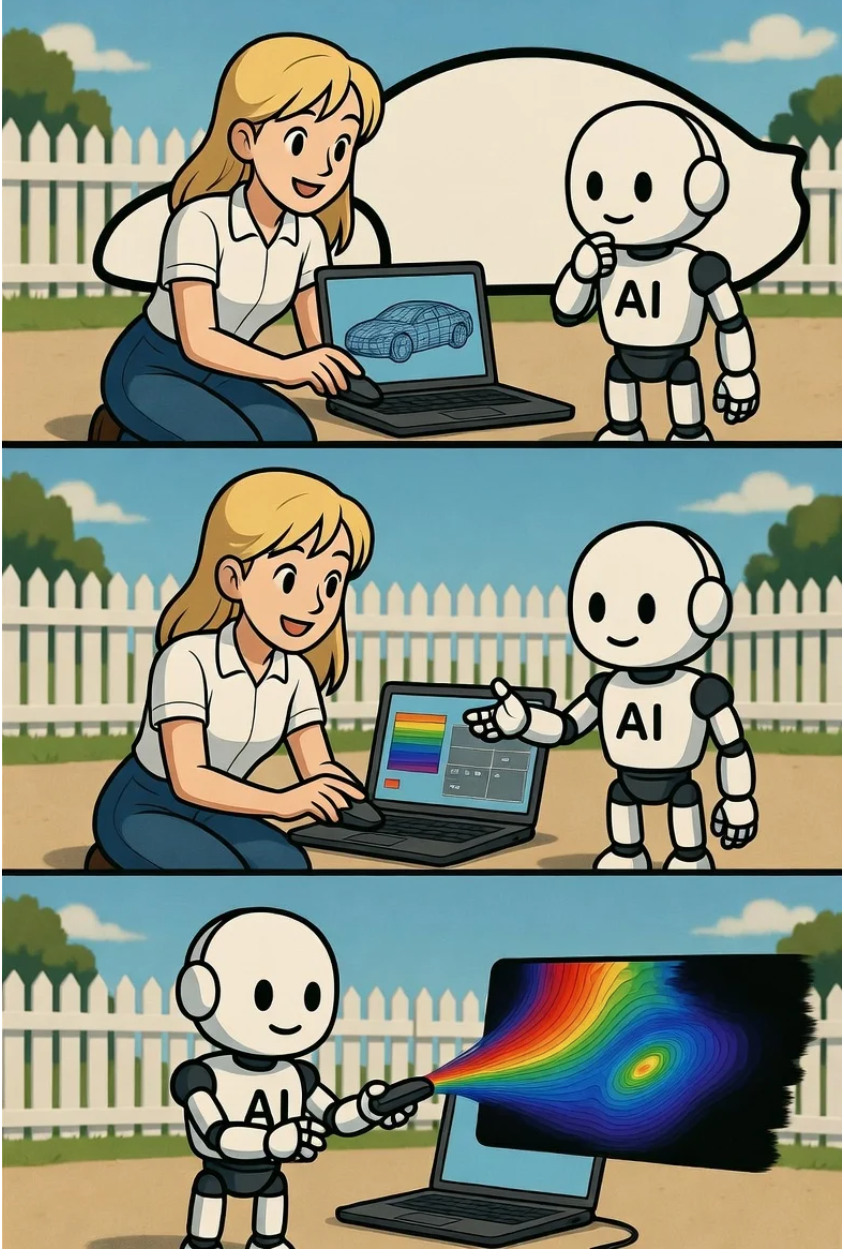
Robot, Co-Bot, or No-Bot.
As we head into the final quarter of the year, I’ve been thinking about how quickly time moves. In engineering, we tend to think in terms of schedules, development cycles, project milestones, and deadlines. But there’s another kind of cycle that’s just as important—the cycle of learning, adapting, and looking ahead.
Every year brings its share of changes, and this one has been no different. We’ve seen new technologies move from interesting ideas into practical engineering tools, and we’ve had the opportunity to be part of some great conversations through industry events, customer projects, and our work with partners. It’s been a busy year, but more importantly, it’s been a year of learning and growing.
One thing that continues to stand out to me is how quickly the engineering landscape is changing. Simulation is no longer simply a tool used to validate a design at the end of a process. It is increasingly part of the conversation from the very beginning—helping engineers explore ideas, understand tradeoffs, and make better decisions along the way. That shift creates a lot of opportunity for companies like TotalSim, and it’s something we’re excited to continue building on.
Our partnership with Siemens has also been an important part of that growth. The continued expansion of the Siemens portfolio, gives us an even broader set of tools to bring to our customers. For us, it’s not just about having more software available—it’s about being able to help our customers find the right approach for the problem they’re trying to solve.
As we look back on the year, I’m grateful for the people who have made it a good one: our team, our customers, our partners, and everyone who continues to challenge us with interesting problems. Those relationships are what keep the work interesting and keep us moving forward.
There’s still plenty ahead before we close out the year, and plenty more to look forward to in the next one. For now, I hope you enjoy this quarter’s newsletter and take a few minutes to look back with us at some of the people, projects, events, and ideas that have shaped the year.