

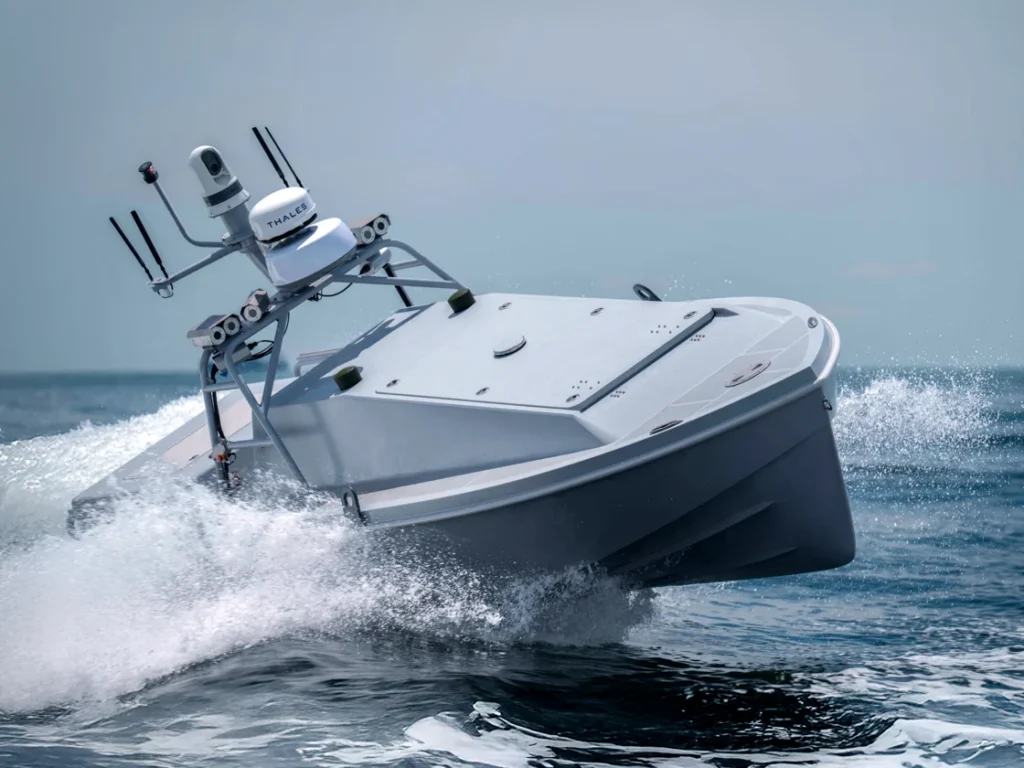
As of early 2026, the marine vehicle sector is undergoing rapid transformation, driven by increasing demands for sustainability, autonomy, and expanded operational capability. Innovation is accelerating across several key areas, including unmanned systems for both commercial and defense use, next-generation amphibious combat vehicles with greater durability and firepower, and emerging technologies such as AI-enabled navigation and electric propulsion.
Market momentum reflects this surge in innovation. The unmanned marine vehicles market is projected to grow from $4.71 billion in 2025 to $5.17 billion in 2026, representing a 9.8% CAGR. Autonomous marine vehicles are expanding even faster, expected to rise from $3.52 billion to $4.09 billion over the same period, with a 16.3% CAGR. This growth is being fueled by government investment, rapid adoption of AI, and expanding use cases across surveillance, environmental monitoring, and offshore energy.
Unmanned and Autonomous Marine Systems
Uncrewed maritime systems remain at the forefront of industry advancement. Cooperative AI is enabling coordinated operations between uncrewed surface vessels (USVs) and aerial platforms, creating more capable, software-driven ecosystems. In late 2025, Canada’s Ocean Supercluster supported trials that integrated Open Ocean Robotics’ USV with Seahawk Robotics’ amphibious UAS, demonstrating how interconnected platforms can improve maritime data collection and operational efficiency.
Demand continues to rise for long-endurance platforms and high-precision oceanographic sensing. Companies such as HII have introduced modular systems like the REMUS 130 unmanned underwater vehicle (UUV), designed to reduce cost while increasing mission flexibility. In Europe, Fincantieri launched the DEEP integrated underwater drone in 2025 for surveillance and environmental monitoring, while Helsing SE expanded its autonomous underwater vehicle (AUV) capabilities through its acquisition of Blue Ocean Marine Tech Systems.
Additional developments underscore the industry’s shift toward electrification and adaptability. SMD completed testing of its first electric work-class ROV for subsea operations in 2025, and Teledyne Gavia delivered four GAVIA AUVs to Sweden’s defense administration. Broader trends for 2025–2026 emphasize compact sensing technologies, scalable autonomy, integrated security, and rapidly deployable platforms—including emerging 3D-printed USVs such as those developed by SeaRush.
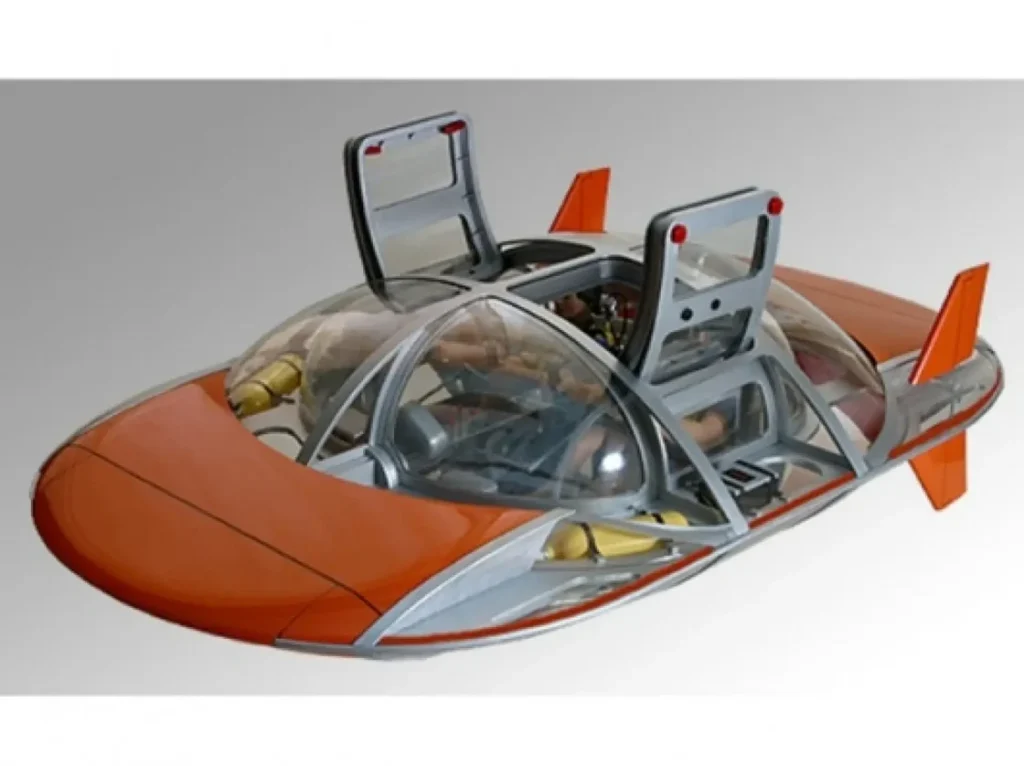
From 2009, using revolutionary design, Marine Innovation Technologies’ concept of an underwater vehicle can be powered by just two people pedaling
Military Amphibious and Combat Vehicles
Parallel to unmanned innovation, the U.S. Marine Corps continues to invest heavily in amphibious combat vehicle modernization. In February 2026, BAE Systems secured a $195 million contract for 30 additional ACV-30 vehicles equipped with the 30mm Kongsberg MCT-30 turret, expanding total orders beyond 150 units. This variant enhances ship-to-shore mobility and improves engagement capability in contested environments.To maintain fleet readiness, the Marine Corps is also replacing corroding structural components across its ACV fleet with more durable and cost-effective solutions. BAE recently delivered three ACV-Recovery variants to support maintenance and battlefield logistics. Meanwhile, General Dynamics is advancing the Advanced Reconnaissance Vehicle (ARV), showcased at Modern Day Marine 2025. The platform integrates multi-domain sensors, unmanned systems, and modular architecture, supported by AI-driven predictive maintenance tools such as VITALS. These efforts align with the Marine Corps’ broader modernization strategy, which emphasizes AI-assisted targeting, unmanned integration, and resilient command networks.
What’s Next
Research and development in underwater systems continues to accelerate, particularly in ROVs, AUVs, and hybrid platforms aligned with the Fourth Industrial Revolution. These technologies are reducing operational risk, lowering costs, and expanding scientific and commercial capabilities.Looking ahead, deeper integration of robotics, autonomy, and AI will continue to shape the future of marine operations—enabling smarter, more scalable, and more efficient systems across both defense and commercial domains.