

Data centers are becoming the backbone of modern life.
From AI and cloud computing to streaming platforms, digital twins, simulation, and connected devices, nearly every industry now depends on massive amounts of computing power. And as demand for data continues to grow, so does the infrastructure required to support it.
In fact, the rapid expansion of AI alone is driving a new wave of hyperscale data center construction across the U.S. and globally. Companies are investing heavily in larger, more powerful facilities capable of supporting advanced computing workloads and high-performance processing.
But with that growth comes a major challenge: energy consumption.
The Energy Challenge Behind Digital Growth
Modern data centers require enormous amounts of power—not only to run servers, but also to cool them.
As compute density increases, thermal management has become one of the industry’s biggest engineering hurdles. AI-focused facilities, in particular, generate significantly more heat than traditional server environments, pushing cooling systems to their limits.
According to recent industry projections, global data center electricity demand is expected to continue climbing rapidly over the next several years, driven largely by AI infrastructure expansion and increased cloud adoption.
That growth has sparked a broader conversation around sustainability, efficiency, and how to scale digital infrastructure responsibly.
Why “Green” Data Centers Matter
The industry’s focus is shifting from simply building bigger data centers to building smarter and more energy-efficient ones.
Today’s next-generation facilities are increasingly incorporating:
- Advanced cooling technologies
- Renewable energy integration
- Waste heat recovery systems
- High-efficiency airflow management
- AI-driven operational optimization
- Sustainable building practices
Many companies are also exploring liquid cooling and immersion cooling systems to reduce the energy demands associated with traditional air-based cooling methods.
The goal isn’t just reducing environmental impact—it’s improving operational efficiency and long-term scalability.
The Role of CFD and Simulation
This is where computational fluid dynamics (CFD) and simulation are playing an increasingly important role.
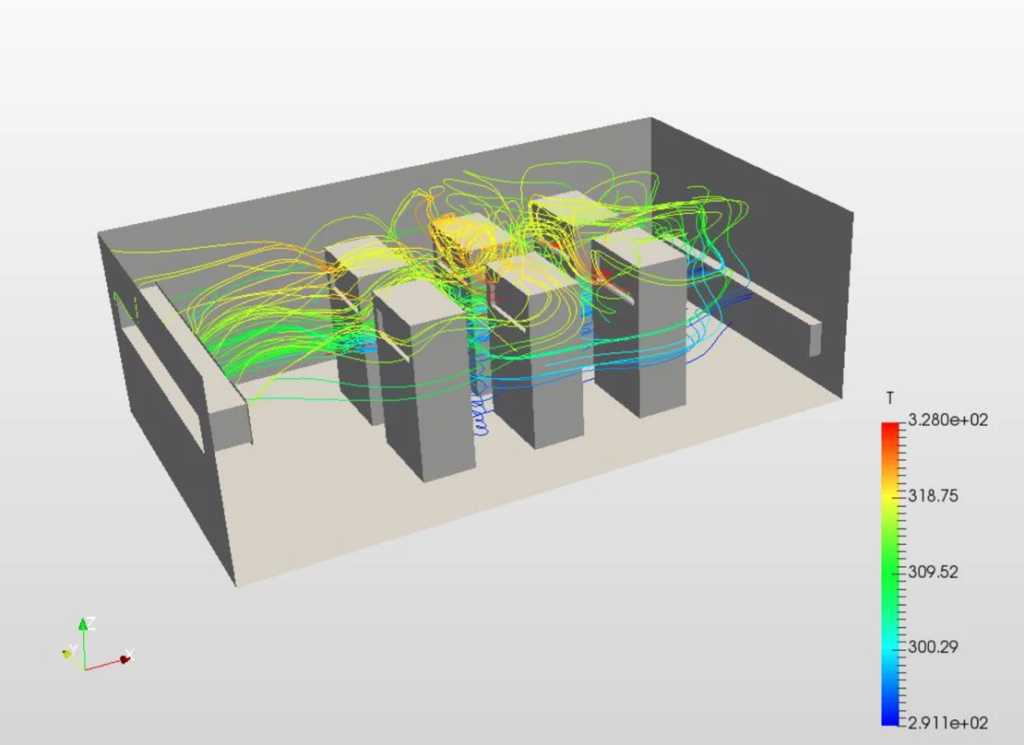
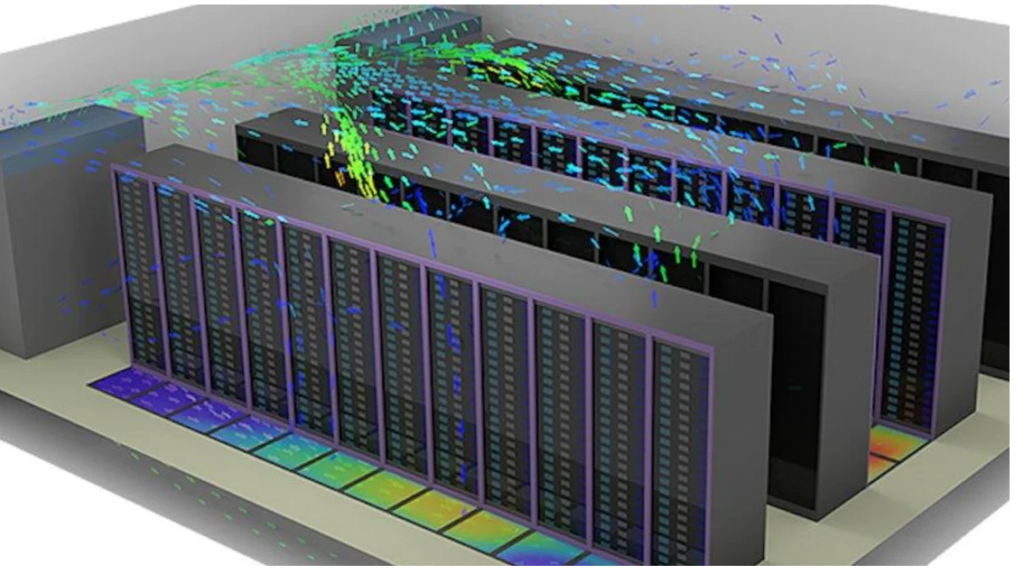
Before a data center is ever built, engineers can use CFD to model airflow, heat transfer, pressure distribution, and cooling performance throughout the facility. These simulations help teams identify hot spots, optimize equipment layouts, and evaluate cooling strategies before construction begins.
As facilities become larger and more complex, simulation allows engineers to make smarter decisions earlier in the design process—reducing energy waste while improving reliability and uptime.
CFD is also helping support newer cooling approaches, including liquid-cooled server racks and hybrid cooling systems, where understanding thermal behavior is critical to performance.
In many cases, even small improvements in airflow efficiency can translate into significant reductions in power consumption and operating costs across large-scale facilities.
AI Driving Both the Problem — and the Solution
Interestingly, AI is contributing to both sides of the equation.
AI-driven workloads are increasing demand for larger, more power-intensive data centers. At the same time, AI tools are also being used to optimize cooling performance, predict maintenance needs, and improve energy management inside these facilities.
This convergence of AI, simulation, and smart infrastructure is reshaping how data centers are designed and operated.
Looking Ahead
The growth of digital infrastructure isn’t slowing down anytime soon. As industries continue embracing AI, cloud computing, simulation, and connected technologies, demand for data centers will only continue to rise.
The challenge moving forward will be balancing that growth with sustainability.
That’s why engineering tools like CFD, thermal simulation, and digital modeling are becoming essential—not just for improving performance, but for helping create a more efficient and environmentally responsible future for computing infrastructure.
Because powering the future is important—but powering it responsibly may be even more critical.